
Searching for the sound of Arabic music?
For rock, blues & jazz guitarists. Arabic Maqam for Electric Guitar gives you real maqam vocabulary adapted to the standard electric guitar. Start playing the sound of Arabic music with 30 interactive, multimedia lessons.
How a lesson works
Make measurable improvement with short, digestible lessons designed to give you Arabic guitar phrases, one by one. Explore an example lesson:
Kurd: Bright Major 6th
Watch
Practice
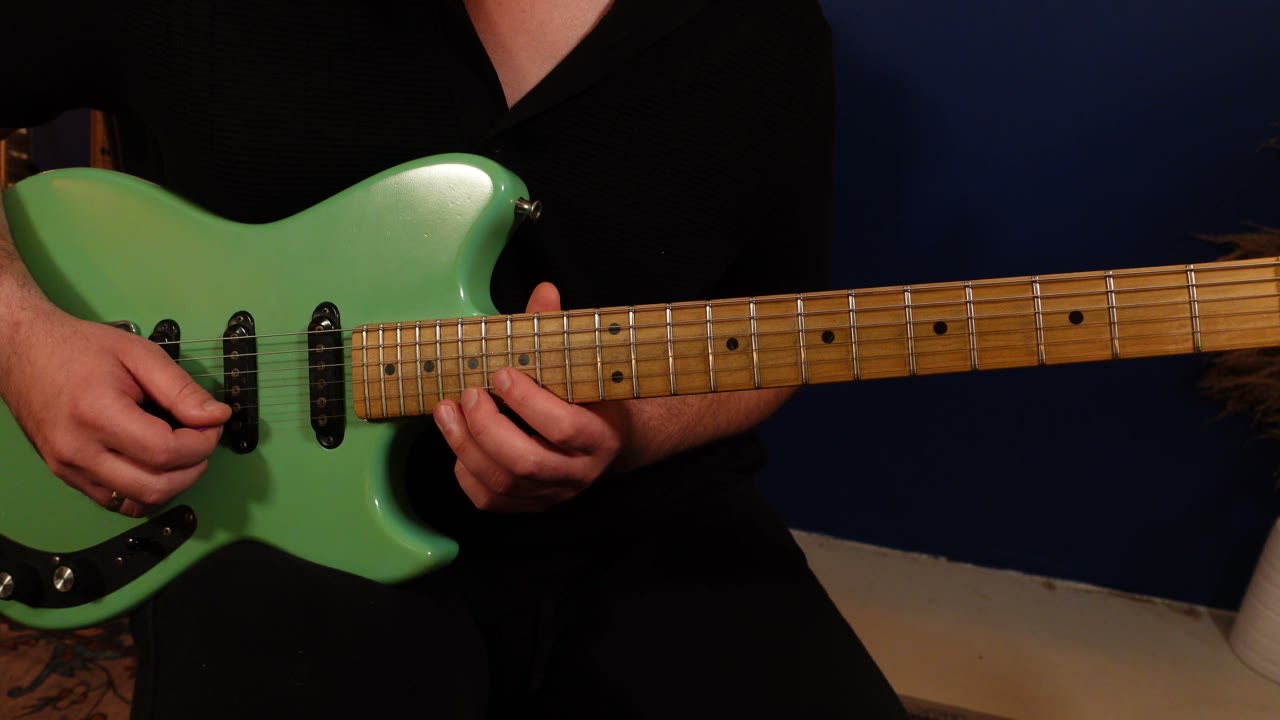
Play
Backing track
G · 80 bpm
- 85Beat
- 85Bass
- 85Rhythm Guitar
- 85MelodyFretless guitar
Loading stems…
All 30 lessons, by maqam
Who this is for
I made this for blues, rock and jazz players who want the sound of Arabic music in their own improvising and writing. It is not a style course and it is not a scale shape. You learn how maqam and melody work, so you can take it anywhere you already play.
This is the opening of the Welcome Video from inside the course: what a maqam is, and the first line you'll play in Nahawand.
What people say
Comments on my Instagram, as written.
ayperi_alizarinbellydance
Rami, I hope you do more courses in Arabic guitar. I'm taking your Hijaz course and love it. It's opened up a lot of possibilities.
1on Secrets of Arabic Electric Guitar
tjrehmi
Ok I understand. Maqams are combining tetrachords or Jins and, as in Indian classical raags, are not just the scale but are melodic characteristic phrases. This is the same as the blues which is not just a scale but is “blues phrasing” based on certain rules and feelings or colours.
3on Learn Nahawand, Wayak
glossolali.a
Crazy knowledge and great explanation! Thank you. I found myself naturally drawn to playing the dorian and mixolydian on the oud as a) I have a strong background in British folk music which employs these a lot and b) they're super easy to play and create a wonderful meditative sound. But now I know Why!
4on The Arabic cousin of the Dorian mode
flutebat
Ohhh so it helps to dance around and with a motif! I always wondered why my improvisation would waffle 🧇
1on Telling a story
divadnosnibor
Back when I was 14-15 in the late 80s, I started listening to a British band called The Cure. He uses Arabic scales over a droning E baseline, like in your video. Since then, although I'm a white dude from California, it's like it's been infused in my blood. Hope to learn more, it's fascinating! 🙌🔥
2on Secrets of Arabic Electric Guitar
the.0ne3bd
Love the arabic knowledge u are a legend for being in our musical culture
1on Bayati mode, Jayebli Salam
Quarter tones
This is the primer from inside the course. Watch the opening, then read how I approach the note.
natrixx977
If there's one thing about Arab music that scares me, it's the fact that there are quarter tones in the middle of the scales. How to do those on a fretted guitar?
14 likes, on the Jayebli Salam reel
Some maqamat carry a quarter tone in the lower jins. Bayati is one of them: the second note sits a half flat, between the notes a fretted guitar gives you. On the electric I reach it with a small bend, a micro bend, and the bend only makes sense inside a phrase. Try to play the note by itself and you will not find it. Play the melody and it is there.
The technique is a pre-bend. For the Bayati two I go to the eighth fret with my second finger and push the string up a little before the note sounds. Then I tune it with the track. Every backing track in the course has the melody played on a fretless guitar, so there is always a true version of the note to match. Turn the fretless up and lock into its pitch. Turn it down and the note is yours.
This is a conceptual note, not a reading on a tuner. You find it by listening to recordings, listening to the practice material, making the bend, and letting the tuning settle. It is vocabulary. It lives in phrasing, in melody, and in the direction a line is moving.
The mistake most guitar players make with maqam is practicing it like a scale, straight up and down. The microtonal maqamat do not work that way. Each one has signature melodies built from the lower jins, with the quarter tone down low, and those melodies are what you learn here.
One more thing to keep in mind. Arabic music is built on the oud, which has no frets and a tuning system of its own, so anything we play on a fretted electric is an adaptation. That is fine. The point is to take the language into your own playing and find new sounds with it.
The phrase from the video, as a lesson
The first Bayati exercise in the course. The half-flat two is written as a quarter-tone pre-bend, and the notation follows the clip.
Bayati: The Bayati 2
Who's teaching
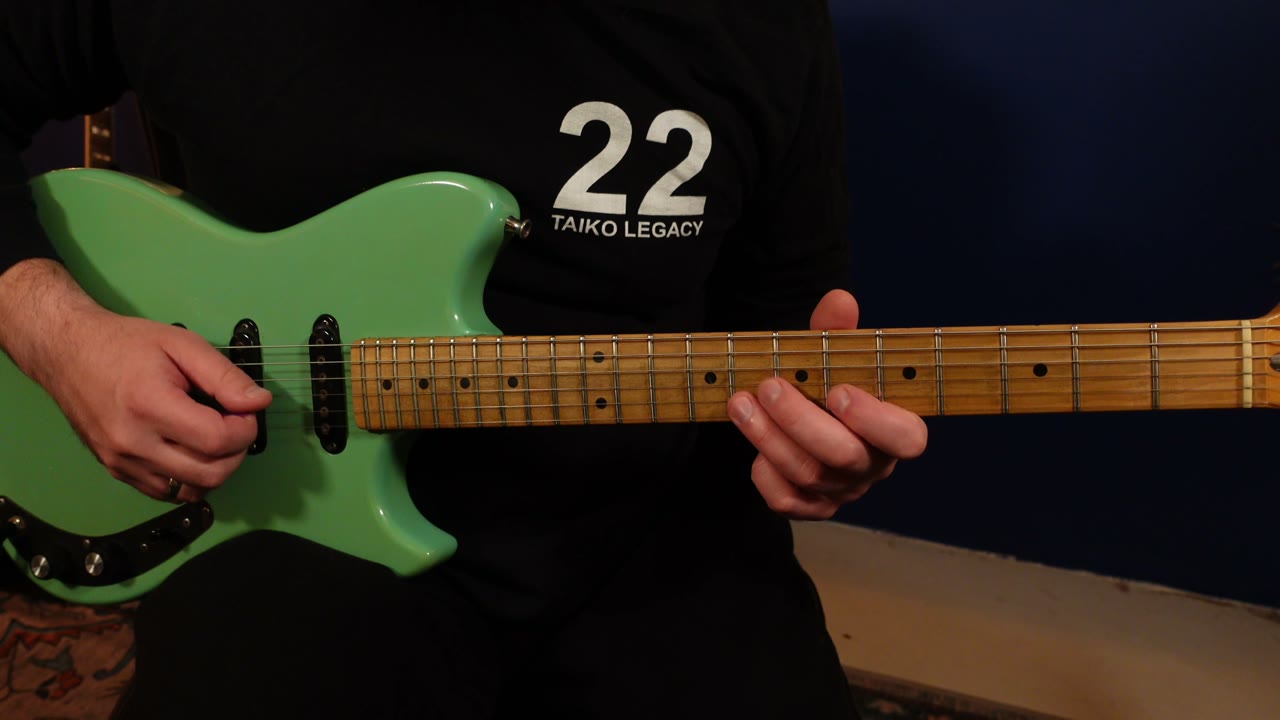
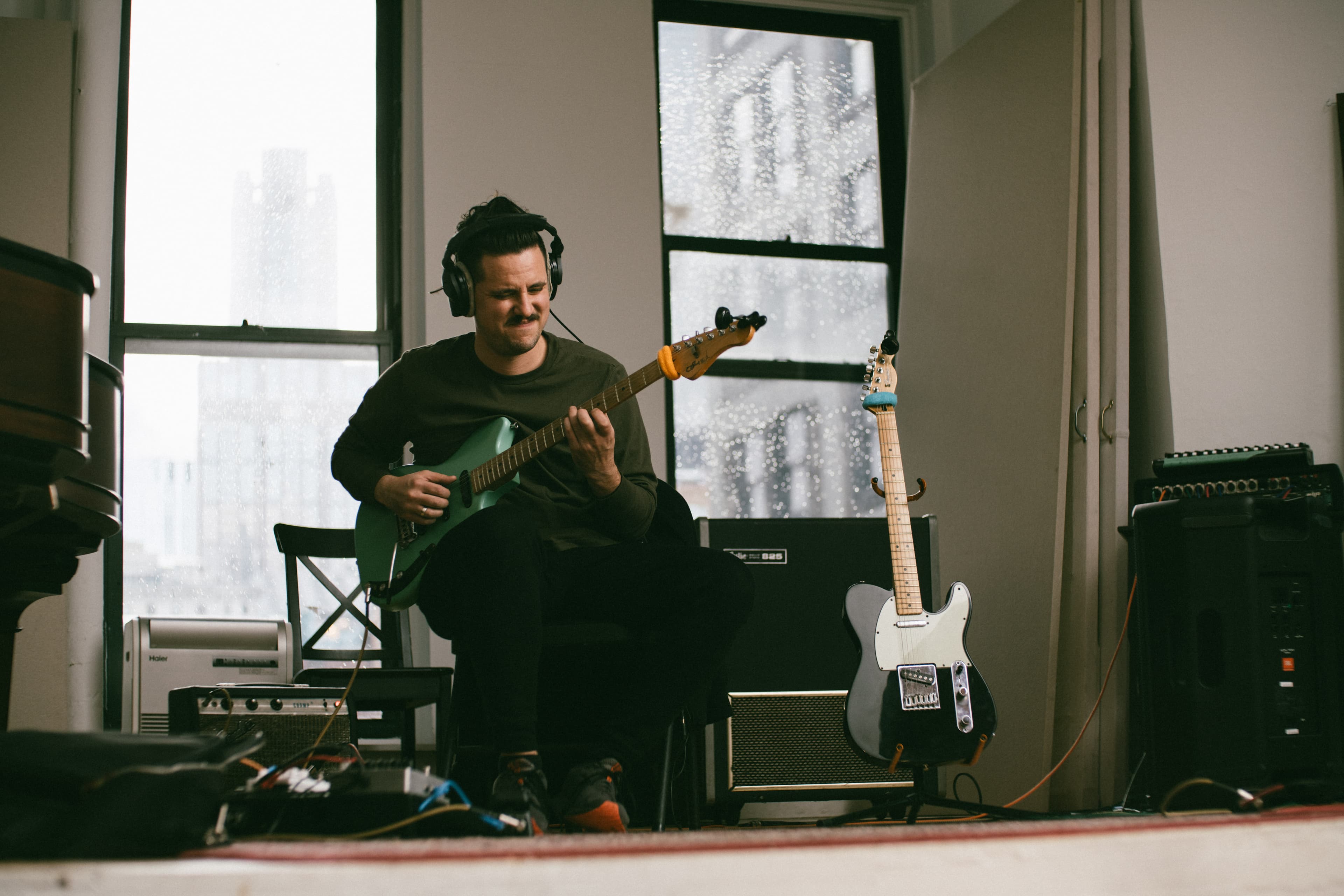
I'm Rami Atassi, a Syrian-American guitarist and composer in Chicago. I learned maqam by ear, from recordings and from mentors, and I play it on fretless guitar in oud tuning.
I built this platform myself, and this is the course I wished existed when I started. When you buy it you get me too. I follow your progress and check in by email as you work through it.
Get the course
Secure checkout via Stripe. Instant access.
If it isn't for you, email me within 30 days and I'll refund you in full.
- 30 lessons in five maqamat: Kurd, Hijaz, Nahawand, Bayati and Rast
- A lesson video, a notated demonstration, and a layered backing track for every lesson
- Welcome Video, Playing Quarter Tones, and the Listening Guide
- Exercise Book and Backing Track Practice
- Backing track downloads for every module
- Progress tracking, and email check-ins from me as you go
- Lifetime access on any device
Questions
Do I need a fretless guitar?
No. Everything is played on a standard fretted electric. The fretless guitar on the backing tracks is there for your ear: it plays the melody with true intonation so you have something to tune to.
Do I need to read music?
No. Every phrase has tab, standard notation, video and audio in sync. Tab is enough to learn every lesson.
Does it work on acoustic or nylon string?
The course is built for electric. The quarter tones are bends, and light electric strings make them easy. A steel string acoustic works if you are comfortable bending. Nylon makes it hard.
Is Hijaz for Guitarists included?
No. Hijaz for Guitarists is a separate course on one scale in three keys. This course has its own Hijaz module of six lessons, built on maqam rather than scale shapes.
Can I download the backing tracks?
Yes. Every module's backing track comes as two stereo mixes, with and without the fretless melody. The layered mixer with the four faders lives in the platform.